Basement Flooring Ideas & Inspiration
Dec 31, 2025 | Carpet One Floor & Home
Key Takeaways
- The right basement flooring comes down to three factors: how much moisture the space sees, the condition of the concrete slab, and how you plan to use the room.
- Luxury vinyl, tile, and water-resistant carpet are the most reliable choices for basement moisture, while solid hardwood is better suited to above-grade rooms.
A finished basement is more than extra square footage. It's a blank canvas ready to become one of the most useful rooms in your home, and the flooring you choose sets the tone for everything that follows. As your local flooring experts, we're here to help you sort through basement flooring ideas that actually work for your space and your lifestyle. Read on to explore how to choose, what to know before you install, and design inspiration for every kind of basement.
Deciding How You'll Use Your Basement
Start by deciding on the purpose of your new space, since that choice will guide nearly every design decision that follows. Some of the most common basement uses include:
- Home office
- Entertainment room
- Fitness space
- Kids' playroom
- Guest suite
Once you know how you'll use the space, it's time to start building your vision, and there's no better place to start than the floor.
Getting Your Basement Ready: Subfloors, Underlayment, and Moisture Barriers
Good basement flooring starts long before the new floor ever goes down, with a few key decisions about what happens underneath it.
- Moisture barriers. Concrete is porous, and it can wick moisture up from the ground even in basements that seem perfectly dry. A moisture barrier, sometimes called a vapor barrier, sits between the concrete and your new floor to stop that moisture from reaching it. This step matters most under carpet, laminate, and engineered hardwood.
- Subfloors and underlayment. Some basements benefit from a subfloor, a layer of plywood or interlocking panels installed over the concrete that creates a small air gap for insulation and comfort. Underlayment adds another layer of cushioning, sound absorption, and moisture protection between the subfloor and your finished floor.
- Direct-to-concrete installation. Not every basement needs a subfloor. Luxury vinyl plank, vinyl tile, and porcelain tile can often install directly onto a clean, dry, and level concrete slab, especially with a moisture barrier underneath. This makes them some of the most practical choices for basements where ceiling height is tight or the project timeline is short.
How to Choose the Right Basement Flooring
The best basement flooring isn't one product, it's the one that fits your space. Here's the three main factors to point you in the right direction.
- Moisture. Basements sit below grade, which means they deal with more humidity and a higher risk of water exposure than any other room in the house. Moisture-resistant and waterproof materials are worth prioritizing here, even in basements that have never flooded.
- Your concrete slab. Every basement floor starts with concrete, and no two slabs are exactly alike. A slab that's level, dry, and in good condition opens up more flooring options, including some that install directly on top. An uneven or consistently damp slab may need extra prep work first, like leveling or a moisture barrier, before any new floor goes down.
- How you'll use the room. A home gym calls for cushioning and shock absorption. A home theater benefits from sound-dampening softness. A wine cellar or bathroom needs a floor that shrugs off spills and splashes. Matching the floor to the room is the surest way to get a result you'll love for years.
Basement Flooring Options at a Glance
Today's basement flooring is stylish, durable, and built to handle moisture and everyday foot traffic. Here's how the major categories compare.
- Carpet: Soft and warm, available in water-resistant and waterproof styles. Best for dry basements, playrooms, and home theaters. Needs a moisture-resistant pad and benefits from a below-grade rated product.
- Carpet Tiles: Easy to replace tile by tile and fully customizable. Best for flexible spaces and play areas, since a damaged section is a quick spot replacement.
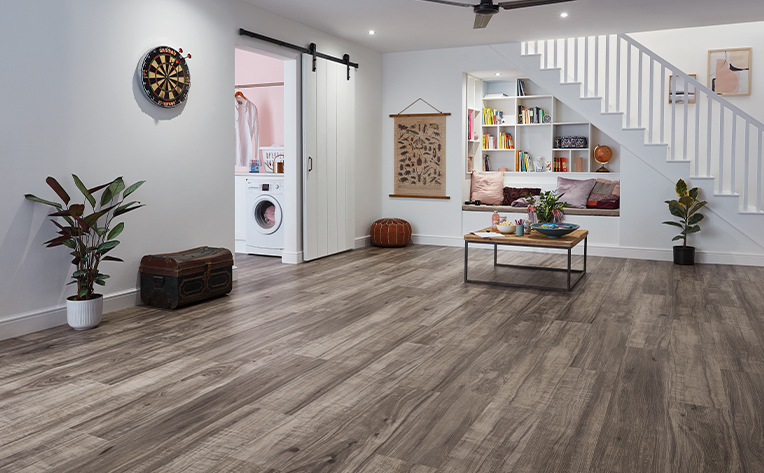
- Luxury Vinyl (LVP/LVT): Moisture-resistant and durable, with realistic wood and stone visuals. Best for high-traffic, moisture-prone basements and family rooms, and comfortable and quiet underfoot with low maintenance.
- Laminate Flooring: Wood-look and durable, available in water-resistant options. Best for home offices and fitness spaces. Look for a water-resistant variety made for below-grade use.
- Tile: Offers superior moisture resistance, an elegant look, and easy cleanup. Best for wine cellars, bathrooms, and wellness spaces. Porcelain resists moisture best, while natural stone can feel cold underfoot.
- Engineered Hardwood: Stylish and stable, more moisture-tolerant than solid hardwood. Best for home offices and drier basements, where moisture exposure stays minimal.
Carpet That Holds Up to Basement Life
Modern carpet can absolutely work in a basement, especially waterproof and water-resistant styles built to handle spills and everyday moisture. Carpet tiles are a practical choice too, letting you replace individual squares as needed, while area rugs add warmth without a long-term commitment. Patterns and darker colors can help hide traffic and stains, while lighter carpets brighten the space and make it feel more open.
Expert Tip: Whatever style you choose, pair it with a moisture-resistant carpet pad for added comfort and insulation, especially in a recreation room or play area.
Luxury Vinyl: Style and Durability Below Grade
Luxury vinyl flooring, often called LVP or LVT, is a basement favorite thanks to its moisture resistance, long-lasting durability, and design flexibility. It mimics the look of wood or stone, stands up to busy households, and feels comfortable and quiet underfoot. Most options are straightforward to install and low-maintenance, giving you style and peace of mind in one package.
Laminate Flooring for a Below-Grade Glow
Another wood-look flooring option, today's laminate offers realistic wood grain patterns and is highly durable and easy to maintain. Look for a water-resistant laminate designed for below-grade use, and it becomes a smart choice for a basement home office, fitness space, or family room.
Tile: Built for Basements That See Moisture
In moisture-prone spaces, ceramic, porcelain, and natural stone tile offer lasting durability and easy cleaning. Porcelain tile delivers the best water resistance of the group, while natural stone adds an elegant, upscale feel. With a wide range of colors, patterns, and grout options, tile suits nearly any basement style, from a wellness room to a home bar.
Engineered Hardwood: Real Wood Warmth, Built for Basements
Engineered hardwood brings the warmth and character of hardwood to a basement, with a construction that holds up better to humidity and temperature shifts than solid hardwood. A top layer of genuine wood sits over a stable core, so the floor is less likely to expand, contract, or warp as conditions change. It works best in drier basements with well-managed humidity, and it's a natural fit for a home office, guest suite, or any space with lighter everyday traffic.
Basement Design Inspiration
Let's explore some basement design ideas, each built around a floor that matches the room's purpose.
Playrooms with Family-Friendly Flooring
- A basement playroom fits naturally into everyday family life. Add storage for toys, pick a theme that sparks imagination, and let color take over the walls.
- Best fit: Carpet tiles or a soft area rug layered over water-resistant flooring keep the space comfortable for kids playing at floor level, while staying easy to refresh as they grow.
Game On, Basement Style
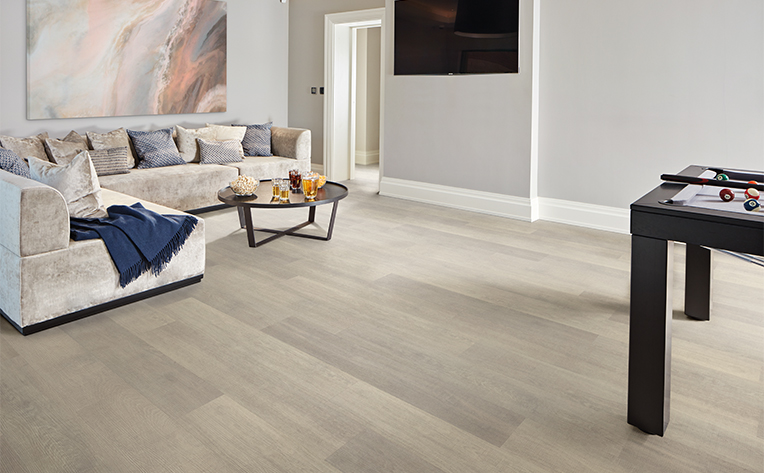
- A basement game room brings friendly competition home, whether it centers on a pool table, dartboard, foosball, or shuffleboard.
- Best fit: Luxury vinyl or laminate stand up to lively game nights and wipe clean with ease. An area rug can help define separate zones within the room.
Home Theaters with Comfy, Cozy Carpet
- A basement home theater brings movie night to life, and flooring plays a bigger role than you might expect.
- Best fit: Carpet is the natural choice here. Its fibers absorb sound and cut down on echo for a more immersive feel, and a high-pile, darker-toned option hides the occasional spilled snack.
Wine Cellar Retreat
- A basement wine cellar is a rewarding project for anyone who loves entertaining. Climate control, wooden shelves, LED lighting, and textured walls give the space an exclusive, tucked-away feel, with a tasting table for sharing a glass with friends.
- Best fit: Porcelain tile, natural stone, and engineered hardwood all bring visual appeal along with the moisture resistance a wine cellar depends on.
Your Productive Home Office Escape
- A basement home office can be both stylish and productive, with a spacious desk, purposeful furniture, and built-in storage to keep the day organized.
- Best fit: Luxury vinyl or engineered hardwood offer durability with easy upkeep, while carpet brings the most comfort underfoot. Either way, practicality here pays off daily.
A Basement Space for Wellness
- A basement home gym turns unused square footage into a fitness sanctuary, with room for a treadmill, weights, or yoga.
- Best fit: Carpet or rubber flooring adds cushioning and shock absorption to protect joints and reduce noise. Interlocking floor tiles are another flexible option that can shift as your equipment does.
Step Into Your Dream Basement
Your basement has the potential to become one of the most cherished spaces in your home, and the right flooring is what makes that vision possible. Our flooring experts know how basements behave differently, from moisture concerns to subfloor decisions, and we're here to help you weigh your options with confidence. Contact us today to talk through your project and take the next step toward a basement that's both functional and unmistakably yours.